An ADA unit is not a standard porta potty with a sticker on it. The footprint runs roughly five feet by five feet or larger — noticeably wider than a standard unit — because the interior has to allow a wheelchair to…
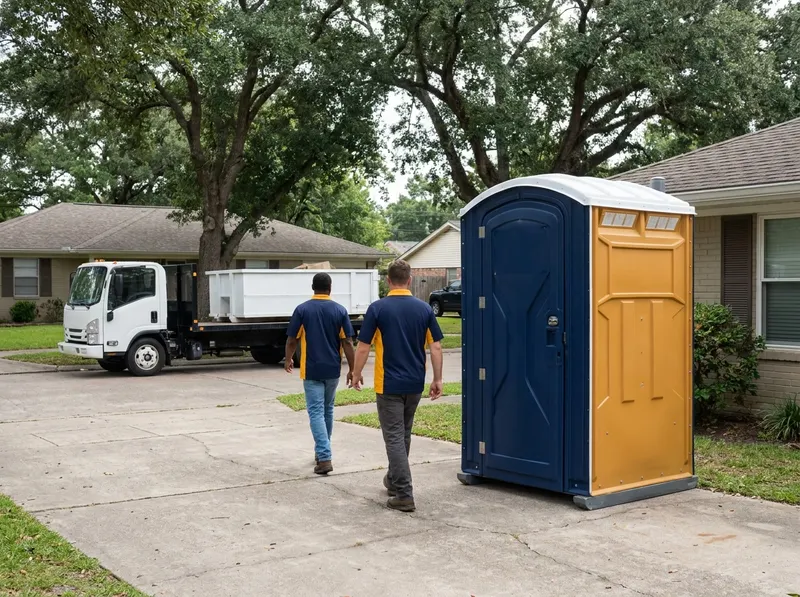
An ADA unit is not a standard porta potty with a sticker on it. The footprint runs roughly five feet by five feet or larger — noticeably wider than a standard unit — because the interior has to allow a wheelchair to enter, close the door and turn. The entry is flush with the ground instead of the usual raised step, the door swings wide, and handrails are mounted inside. That extra size is the whole trade-off: an ADA unit needs a firm, level spot and a clear path wide enough to roll it in, so a standard 36-inch backyard gate in Mid City or the Garden District usually will not pass one. Standard units fit tight side yards; ADA units need a driveway, a parking pad, a lawn edge or a street-side placement instead.
ADA-accessible restrooms fit any Baton Rouge event or site where the public, guests, or crew members with mobility needs will be present — permitted festivals, church and school functions, fundraisers, weddings in a park, race finish lines, and long-running construction projects with accessible parking. Widely cited accessibility guidance calls for roughly 5% of restroom units to be accessible, with a minimum of one, and for the accessible unit to sit on an accessible route rather than off in the grass behind the bank of standard units. Practically, that means one ADA unit next to your standard bank for a 150-guest event, and more as your unit count climbs. If your gathering is small, private and has no attendees who need it, standard units alone are fine — the ADA unit costs more and takes more room, and honest advice is not to add one you don't need.
Placement is where Baton Rouge gets specific. Parade and festival setups around Spanish Town and Beauregard Town run on narrow residential streets with tight turns and low oak limbs, so we plan the drop point before the barricades go up. Events along the Mississippi River levee near Riverfront Plaza have slope to deal with — an ADA unit has to sit level on the flat, not on the incline, or the door and interior clearance stop working as intended. Grass venues like BREC's City Park hold up fine when dry but soften fast after a week of Louisiana rain, so hardstand or a plywood pad keeps the unit stable. Out in Shenandoah, Sherwood Forest, Old Goodwood, Southdowns, Village St. George and Scotlandville, new-build lots usually give us a gravel drive or a compacted pad, which is ideal; rutted, freshly graded dirt is not. Tell us the surface and the truck approach when you call and we place it right the first time.
Service cadence follows use, not the calendar. A single ADA unit on a Baton Rouge job site with a modest crew is typically serviced once a week; heavy public traffic at a multi-day event may need service between days or a second unit instead. Weekend events are commonly delivered Thursday or Friday and picked up the following Monday, which is the pattern most organizers plan around. You get a confirmed delivery date and a confirmed service day, and one phone number — (225) 332-9699 — if anything on site needs attention. Clean units. Confirmed dates. Every time.
Every job gets a firm, written price after a free on-site visit.
Tell us about your ada-accessible portable toilet rental job in Baton Rouge and we'll send a clear, written quote — usually the same day.
 ComfortNova Potty Systems