A standard unit fits when the users are working, moving, or outdoors and nobody needs a sink, a flush, or climate control. That covers framing and slab crews in Village St. George and Shenandoah, roofing and remodel…
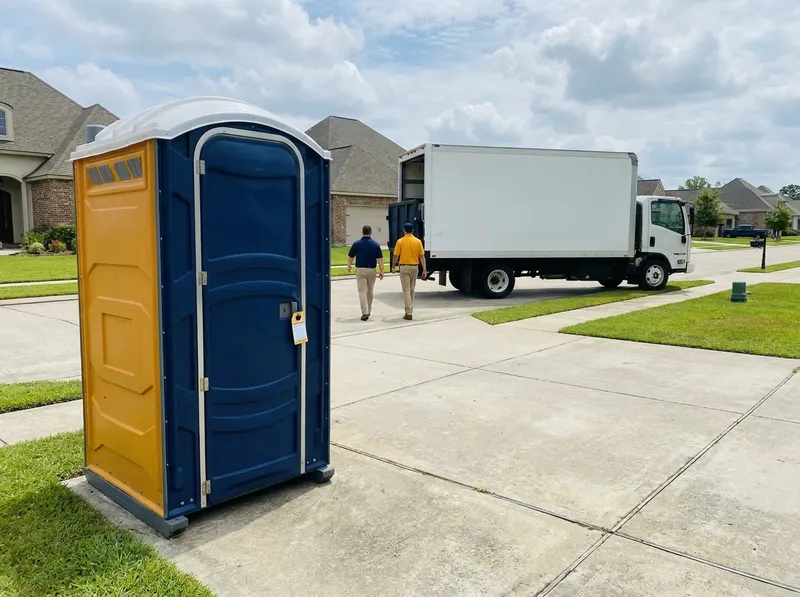
A standard unit fits when the users are working, moving, or outdoors and nobody needs a sink, a flush, or climate control. That covers framing and slab crews in Village St. George and Shenandoah, roofing and remodel work on the tight lots around Old Goodwood and the Garden District, a fence or pool project behind a Sherwood Forest house, and casual outdoor events at parks and open lots. If your event has guests in nice clothes, restrooms indoors are unavailable, and the crowd will be there for hours, a flushing unit or restroom trailer is the better fit — a standard unit trades comfort for cost and simplicity. The trade-off is honest and worth stating plainly: standard units are cheaper, faster to place, and easier to fit into a narrow driveway, but they do not flush and they do not include a sink unless a hand wash station is added.
Unit count is where most Baton Rouge callers guess wrong. The common construction rule of thumb is one standard unit per 10 workers on a 40-hour week with weekly service; push past that headcount and the unit fills before the service truck comes back. For events, plan roughly one unit per 50 guests for a four-hour window, and add units rather than services if there is any alcohol or food service. Service frequency matters as much as count — a unit shared by 12 hands in Baton Rouge's July heat needs twice-weekly attention, while a two-man remodel crew is comfortable on a weekly cycle. Tell us the real headcount on the phone and we will size it instead of overselling units you do not need.
Placement in Baton Rouge has its own quirks, and getting it right on the first drop saves everyone a trip. The service truck needs a firm, reasonably level spot within reach of its hose, so gravel pads and driveway aprons beat soft ground — our gumbo clay turns greasy after a hard rain and a unit sitting in it can lean or sink. In Spanish Town, Beauregard Town, and Mid City, mature oak canopy and narrow one-way streets decide where a truck can actually stop, so we often place along an alley or a rear parking pad rather than the street face. Open, exposed sites — think the levee side near Riverfront Plaza or a wide field lot — catch real wind off the river, and units there should be staked or weighted. Anything near a busy pedestrian path around BREC's City Park, the Raising Cane's River Center, or campus-adjacent streets in Scotlandville near Southern University wants the door facing away from foot traffic and out of the sight line of the main entrance. If you are unsure the truck can get in, a free on-site visit sorts it out before your date.
On pricing: the numbers below are ballparks for standard units only, and the exact figure is confirmed on a free on-site visit or a short call. Rates move with rental length, number of units on one delivery, service frequency, and how far the site sits from the main routes. The $250 minimum applies to any standard unit job in Baton Rouge — add-on rates for extra units or extra service visits apply within a job that already meets the minimum. You get the date and the number before the truck rolls, not on the invoice.
Every job gets a firm, written price after a free on-site visit.
Tell us about your standard portable toilet rental job in Baton Rouge and we'll send a clear, written quote — usually the same day.
 ComfortNova Potty Systems