Unit count on a construction site is a math problem, not a guess. OSHA's construction sanitation standard generally calls for one toilet facility for crews of 20 or fewer workers, then scales up as headcount grows —…
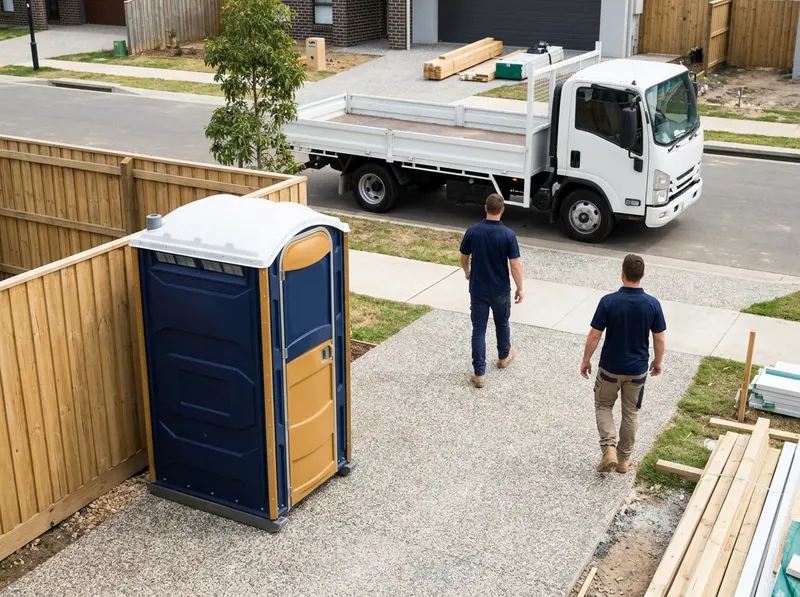
Unit count on a construction site is a math problem, not a guess. OSHA's construction sanitation standard generally calls for one toilet facility for crews of 20 or fewer workers, then scales up as headcount grows — which is why a five-man framing crew and a 60-worker commercial build get very different answers. Tell us the peak headcount, not the average. A Mid City infill build that runs four trades at once for two weeks needs coverage for that peak week, not for the quiet stretch afterward. If your super has already flagged the issue, that is usually the day to call, because sanitation gets noticed fastest on the sites where it is missing.
Service frequency is where Baton Rouge job sites differ from national assumptions. Weekly service is the baseline and it holds fine for small crews. From late May through September, heat in the 90s plus Gulf humidity accelerates odor inside a closed plastic unit, and crews on 10-hour days push volume well past a homeowner-style estimate. On sites running 15 or more workers, or on any site where the unit sits in full sun with no shade, twice-weekly service is the honest recommendation. Under-servicing a unit is the single most common reason a jobsite rental turns into a complaint. Ask for the cadence you actually need up front and we will quote it plainly instead of letting it show up as an emergency call later.
Placement decides everything about reliability. Our service truck needs to get within roughly 25 feet of the unit with a clear approach — no stacked material, no parked trailers boxing it in, no soft ground. That matters more here than in drier markets: East Baton Rouge Parish gumbo clay turns greasy after a hard rain, and a unit set on raw dirt in a Village St. George or Shenandoah subdivision lot can become unreachable for a day or two. Set it on gravel, on the pad, or near the street edge if you have one. The historic-district streets in Spanish Town and Beauregard Town bring the opposite problem: narrow lots, tight setbacks, street parking on both sides, and neighbors close enough that placement should be discussed before delivery rather than after. Garden District and Old Goodwood renovation jobs usually work best with the unit tucked along the driveway or side yard, screened from the front elevation. Commercial and industrial work out toward Scotlandville near Southern University, or along the river corridor, often means gate hours and a badge or check-in procedure — give us that detail when you book so the driver is not turned around at the gate.
Hurricane season adds one more item. From June through November, any unit on an open Baton Rouge site should be strapped, staked, or moved against a solid structure ahead of a named storm; unsecured units become airborne debris. If a storm is tracking in, call and we will talk through securing or pulling units before the weather arrives. Clean units. Confirmed dates. Every time. That means you get a delivery date in writing, a service day you can hold us to, and a phone number — (225) 332-9699 — that reaches a person who can tell you where your unit stands.
Every job gets a firm, written price after a free on-site visit.
Tell us about your construction site portable toilet rental job in Baton Rouge and we'll send a clear, written quote — usually the same day.
 ComfortNova Potty Systems